تجاوز إلى المحتوى الرئيسي
TranslateTranslate
    • Select a language:

User account menu

  • My Account قائمة المستخدم
Hosted on
  • Overview
    • Home
    • Co-Chairs
  • Communities
  • Drought Toolbox
  • Online Learning
  • Cases
    • Case Studies
    • Case Study Competition Winners
    • Photo Exhibition
  • Primoz Skrt created new community content in Nature-based Solutions in Water Management

    منذ 5 months
    Blog

    Advancing Sustainable Wastewater Management: Introducing the D-CLEAN Project

    Created on
    4 يوليو 2025 •
    كتبه
    Primoz Skrt
    1
    0
    Read more about Advancing Sustainable Wastewater Management: Introducing the D-CLEAN Project
  • Sabrija Čadro posted in Central and Eastern Europe Community

    منذ 5 months الرؤية عام

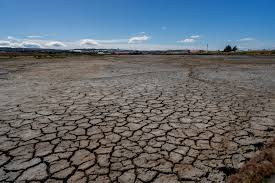
    How is the drought situation in your country?

    Sharing from Bosnia and Herzegovina:
    In Sarajevo (Bosnia and Herzegovina), the last recorded rainfall was on May 29th (21 mm) — since then, we’ve had zero precipitation throughout June. This is unprecedented: looking at historical data (Sarajevo-Bjelave, 1949–2024), we have never had a June without any rainfall. The average for June is 88 mm, and even in the driest year (2012), there were still 12 mm.

    Similar reports are coming from Serbia, where June was extremely dry, pushing concerns beyond meteorological and hydrological droughts to very clear socio-economic impacts due to expected yield reductions.
    This raises important questions for our region:

    - How is the situation developing in your countries?
    - Are you seeing comparable rainfall deficits and stress on agriculture?
    - How are your institutions responding — any new emergency measures, or acceleration of drought adaptation plans?

    I would also like to thank my colleague Dr. Ana Vuković Vimić for raising and framing this issue so clearly in our recent discussions; it truly deserves more regional and global attention.
    As a region, we often go under the radar in global drought assessments, yet it’s clear that Central and Eastern Europe is becoming increasingly vulnerable. Perhaps this is the right time to strengthen our regional voice and ensure we’re recognized as a drought-prone area in global adaptation dialogues.

    Looking forward to hearing your experiences, data and thoughts — let’s exchange and maybe even lay foundations for stronger regional cooperation on drought risk reduction!

    Total amount of likes
    2 likes
    Dislike 0
  • Sara Riade posted in Asia Community

    منذ 5 months الرؤية عام

    Hi everyone, my name is Sara Riade, and I’m currently working as a consultant with the UNCCD in the Global Policy Advocacy and Regional Cooperation (GPARC) Unit. I’ll be helping manage the CLP page and supporting community engagement.
    Please don’t hesitate to reach out if you need any guidance or support navigating the platform — I’m more than happy to help!
    Looking forward to connecting with you all.

    Total amount of likes
    1 like
    Dislike 0
  • Sara Riade posted in Central and Eastern Europe Community

    منذ 5 months الرؤية عام

    Hi everyone, my name is Sara Riade, and I’m currently working as a consultant with the UNCCD in the Global Policy Advocacy and Regional Cooperation (GPARC) Unit. I’ll be helping manage the CLP page and supporting community engagement.
    Please don’t hesitate to reach out if you need any guidance or support navigating the platform — I’m more than happy to help!
    Looking forward to connecting with you all.

    Total amount of likes
    2 likes
    Dislike 0
  • Sara Riade posted in Northern Mediterranean Community

    منذ 5 months الرؤية عام

    Hi everyone, my name is Sara Riade, and I’m currently working as a consultant with the UNCCD in the Global Policy Advocacy and Regional Cooperation (GPARC) Unit. I’ll be helping manage the CLP page and supporting community engagement.
    Please don’t hesitate to reach out if you need any guidance or support navigating the platform — I’m more than happy to help!
    Looking forward to connecting with you all.

    Total amount of likes
    2 likes
    Dislike 0
  • Sara Riade posted in Latin America and the Caribbean Community

    منذ 5 months الرؤية عام

    Please join me in watching the exclusive short film Drought in Chile, available here:
    🎥 Watch the film: https://www.dropbox.com/scl/fi/sor1c98kkcmsfb5m3xvkj/Drought-in-Chile-U…

    This compelling documentary explores the severe impacts of drought in Chile — from water scarcity and devastating wildfires to the lived experiences of rural communities and frontline responders.

    It features voices from affected regions, national focal points, and experts, and highlights the urgent need for climate action, ecological restoration, and equitable water governance.

    A powerful reminder that drought is not only a climate crisis — but also a social and human one.

    Total amount of likes
    3 likes
    Dislike 0
  • Doctora en Ciencias Gerenciales. Doctora en Ecología del Desarrollo Humano  Investigador postdoctoral.l

    Saida Rivero created new community content in Global Community

    منذ 5 months
    Opportunity

    ¿Buscas financiamiento para un proyecto ambiental con impacto global?

    Created on
    2 يوليو 2025 •
    كتبه
    Saida Rivero
    3
    3
    Read more about ¿Buscas financiamiento para un proyecto ambiental con impacto global?
  • Uli Fitri created a new resource in SDG 6 IWRM Community.

    منذ 5 months
    Resource

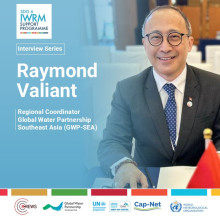
    Water, Warnings & Resilience: Mr. Raymond Valiant on CREWS in Southeast Asia

  • Raunak Shrestha created new community content

    منذ 5 months
    Opportunity

    CLP Case Study

    Created on
    2 يوليو 2025 •
    كتبه
    Raunak Shrestha
    0
    0
    Read more about CLP Case Study
  • ‪Laith ‬‏ Ali Naji posted in Asia Community

    منذ 5 months الرؤية عام

    Why Groundwater Protection Should Be a National Priority in Drought Strategies

    A recent study in Nature Sustainability (2025) on the Ganges–Brahmaputra–Meghna Delta found that unsustainable groundwater-fed irrigation during dry seasons reduces flood risks but increases surface freshwater scarcity and saltwater intrusion in coastal regions.

    While heavy groundwater pumping supports dry-season agriculture and leads to higher aquifer recharge during monsoon seasons, this recharge is insufficient to offset depletion, creating a vicious cycle:

    🔹 Groundwater depletion ➡️ reduced surface runoff ➡️ less surface water for farming ➡️ increased groundwater dependence.

    💧 This means that although groundwater use may temporarily reduce flood risk, it undermines long-term water security and resilience to drought.

    Key takeaways for drought management:
    ✅ Groundwater protection must be a clear priority in national drought strategies, rather than a resource to exhaust during crises.
    ✅ Integrated management of surface and groundwater resources is essential for resilience.
    ✅ Farmers need support to improve water-use efficiency and adopt practices that reduce dependency on excessive groundwater pumping.
    ✅ Expansion of agriculture in coastal deltas must consider sustainable recharge strategies to prevent seawater intrusion and further freshwater scarcity.

    🌍 These findings are globally relevant, as human pressures and climate change increasingly threaten freshwater systems in coastal and deltaic regions.

    ✍️ How can countries balance food security with groundwater conservation in drought management plans? Let’s exchange experiences and lessons to strengthen our collective drought resilience.

    📖 The link of study:
    👉 https://www.nature.com/articles/s41893-025-01566-0

    #DroughtManagement #Groundwater #NatureSustainability #WaterSecurity #UNCCD #CLP

    Total amount of likes
    1 like
    Dislike 0
  • Menna Ghonaim created a new resource in WEFE4MED Knowledge Hub.

    منذ 5 months
    Resource

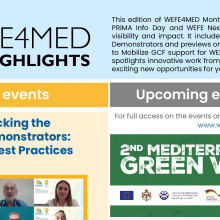
    WEFE4MED May Highlights

  • Dieudonne ILBOUDO

    Dieudonne ILBOUDO posted in Africa Community

    منذ 5 months الرؤية عام

    Combating Desertification in Africa : Zainer’s Contribution to SDG 15 (Life on Land)

    Zainer is a low-cost machine for climate resilient agriculture in arid and semi-arid regions.

    The Zainer is a vertical soil drill, mounted on a two wheeled cart and powered by a small 5hp petrol engine. Excavated soil is deposited on the down-stream side of the Zaï pit to make sure that run-off water from the field is directed into the pit for local infiltration. The design of the Zainer has been optimized for fuel efficiency and drilling speed to minimize the operational costs for the farmer.
    Operating the Zainer can be comfortably done by both female and male farmers. Depending on the soil conditions, farmers are able to produce up to 17 Zaï plantholes per minute and 1 ha of land can be prepared within 5 days (compared to 300 hours of labor for manual Zaï). The drill bit can easily be replaced and be adapted to different soil conditions and desired plant hole dimensions.
    Due to climate change, rainfall patterns in Africa have become less predictable. As a result, African farmers are experiencing production losses for their main rainfed crops. This climate instability, combined with increasing land degradation linked to desertification, poses a serious risk to food security and family incomes, particularly for smallholder farmers.
    Indigenous conservation and regenerative agriculture practices can largely mitigate these risks and help combat desertification, but farmers consider these traditional practices too labor-intensive and economically unviable.
    Affordable mechanization of climate-smart agricultural practices can overcome these drawbacks. An organization called Practica has therefore initiated the development of a simple tool to quickly and inexpensively produce small basins or pits for local rainwater retention. This tool is called "Zaïner," in reference to the traditional West African practice of creating small planting holes, called Zaï.
    This innovative tool aims to strengthen the resilience of soils and farmers in the face of desertification and climate change.


    Total amount of likes
    3 likes
    Dislike 0
  • Dieudonne ILBOUDO

    Dieudonne ILBOUDO posted in Global Community

    منذ 5 months الرؤية عام

    Combating Desertification in Africa : Zainer’s Contribution to SDG 15 (Life on Land)

    Zainer is a low-cost machine for climate resilient agriculture in arid and semi-arid regions.

    The Zainer is a vertical soil drill, mounted on a two wheeled cart and powered by a small 5hp petrol engine. Excavated soil is deposited on the down-stream side of the Zaï pit to make sure that run-off water from the field is directed into the pit for local infiltration. The design of the Zainer has been optimized for fuel efficiency and drilling speed to minimize the operational costs for the farmer.
    Operating the Zainer can be comfortably done by both female and male farmers. Depending on the soil conditions, farmers are able to produce up to 17 Zaï plantholes per minute and 1 ha of land can be prepared within 5 days (compared to 300 hours of labor for manual Zaï). The drill bit can easily be replaced and be adapted to different soil conditions and desired plant hole dimensions.
    Due to climate change, rainfall patterns in Africa have become less predictable. As a result, African farmers are experiencing production losses for their main rainfed crops. This climate instability, combined with increasing land degradation linked to desertification, poses a serious risk to food security and family incomes, particularly for smallholder farmers.
    Indigenous conservation and regenerative agriculture practices can largely mitigate these risks and help combat desertification, but farmers consider these traditional practices too labor-intensive and economically unviable.
    Affordable mechanization of climate-smart agricultural practices can overcome these drawbacks. An organization called Practica has therefore initiated the development of a simple tool to quickly and inexpensively produce small basins or pits for local rainwater retention. This tool is called "Zaïner," in reference to the traditional West African practice of creating small planting holes, called Zaï.
    This innovative tool aims to strengthen the resilience of soils and farmers in the face of desertification and climate change.


    Total amount of likes
    5 likes
    Dislike 0
  • Suyu Liu posted in Northern Mediterranean Community

    منذ 5 months الرؤية عام

    I noticed this publication
    Drought in Europe April 2025 : GDO analytical report
    Toreti, A., Bavera, D., Acosta Navarro, J., Barbosa P, , De Jager, A. et al., Drought in Europe – June 2025 – GDO analytical report, Publications Office of the European Union, 2025, https://data.europa.eu/doi/10.2760/1544910

    The open accessed Abstract is:
    Drought conditions are affecting large parts of central, northern, and eastern Europe as well as northern Africa, the eastern Mediterranean, and the Middle East. Recent above-average temperatures in western Europe have exacerbated the effects of the prolonged lack of precipitation, particularly on soil moisture. Low flow conditions in river discharge are detected mostly in eastern Europe, in the Baltic Sea region, and in some rivers of Türkiye. Impacts on vegetation are emerging in eastern Europe. The already affected areas are mostly in the Mediterranean region. Seasonal forecasts point to a warmer than usual 2025 summer with dry conditions in a very large region extending from the UK to the Black Sea.
    An EU link is: https://op.europa.eu/en/publication-detail/-/publication/188cbe48-4dbd-…

    Total amount of likes
    1 like
    Dislike 0
  • Doctora en Ciencias Gerenciales. Doctora en Ecología del Desarrollo Humano  Investigador postdoctoral.l

    Saida Rivero created new community content in Latin America and the Caribbean Community

    منذ 5 months
    Blog

    Transmisión especial del programa ReVerde por el Día Mundial de Lucha contra la Desertificación y la Sequía, 17 de junio de 2025

    Created on
    26 يونيو 2025 •
    كتبه
    Saida Rivero
    1
    3
    Read more about Transmisión especial del programa ReVerde por el Día Mundial de Lucha contra la Desertificación y la Sequía, 17 de junio de 2025
  • Dieudonne ILBOUDO

    Dieudonne ILBOUDO posted in Global Community

    منذ 5 months الرؤية عام

    The man who stopped the desert : Yacouba Sawadogo

    “For turning barren land into forest and demonstrating how farmers can regenerate their soil with innovative use of indigenous and local knowledge.”

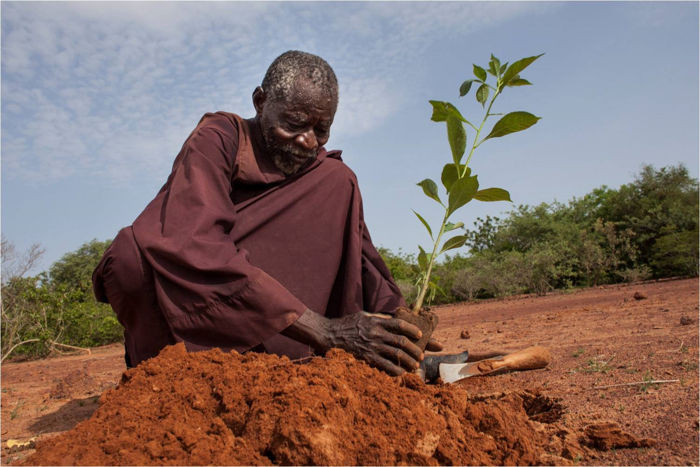
    Yacouba Sawadogo (1946-2023) was known as “the man who stopped the desert”. Starting around 1980 during a phase of severe drought, he successfully created an almost 40-hectare forest on formerly barren and abandoned land. Today, it has more than 60 species of trees and bushes and is arguably one of the most diverse forests planted and managed by a farmer in the Sahel.

    Sawadogo’s remarkable success builds on experimenting with traditional planting pits for soil, water and biomass retention, called “zaï” in the local language. He continued innovating the technique over the years, increasing crop yields and successfully planting trees. Despite facing resistance from locals in the beginning – Sawadogo was called a “madman” and saw his forest set on fire – he never considered giving up. Over time, people came to admire his work.

    Always eager to share his knowledge, Sawadogo trained thousands of visitors from the region and beyond, and empowered farmers to regenerate their land. As a result, tens of thousands of hectares of degraded land have been restored to productivity in Burkina Faso and Niger. Those who adopt Sawadogo’s techniques often become food secure, as zaï help to conserve rainwater and improve soil fertility. Trees planted together with the crops serve to enrich the soil, produce fodder for livestock and create business opportunities like beekeeping. This helps farmers adapt to climate change, reduce rural poverty and prevent local resource and water-related conflicts.


    Total amount of likes
    2 likes
    Dislike 0
  • Dieudonne ILBOUDO

    Dieudonne ILBOUDO posted in Africa Community

    منذ 5 months الرؤية عام

    The man who stopped the desert : Yacouba Sawadogo

    “For turning barren land into forest and demonstrating how farmers can regenerate their soil with innovative use of indigenous and local knowledge.”

    Yacouba Sawadogo (1946-2023) was known as “the man who stopped the desert”. Starting around 1980 during a phase of severe drought, he successfully created an almost 40-hectare forest on formerly barren and abandoned land. Today, it has more than 60 species of trees and bushes and is arguably one of the most diverse forests planted and managed by a farmer in the Sahel.

    Sawadogo’s remarkable success builds on experimenting with traditional planting pits for soil, water and biomass retention, called “zaï” in the local language. He continued innovating the technique over the years, increasing crop yields and successfully planting trees. Despite facing resistance from locals in the beginning – Sawadogo was called a “madman” and saw his forest set on fire – he never considered giving up. Over time, people came to admire his work.

    Always eager to share his knowledge, Sawadogo trained thousands of visitors from the region and beyond, and empowered farmers to regenerate their land. As a result, tens of thousands of hectares of degraded land have been restored to productivity in Burkina Faso and Niger. Those who adopt Sawadogo’s techniques often become food secure, as zaï help to conserve rainwater and improve soil fertility. Trees planted together with the crops serve to enrich the soil, produce fodder for livestock and create business opportunities like beekeeping. This helps farmers adapt to climate change, reduce rural poverty and prevent local resource and water-related conflicts.


    Total amount of likes
    1 like
    Dislike 0
  • Doctora en Ciencias Gerenciales. Doctora en Ecología del Desarrollo Humano  Investigador postdoctoral.l

    Saida Rivero created an event in Latin America and the Caribbean Community

    منذ 5 months
    الحدث

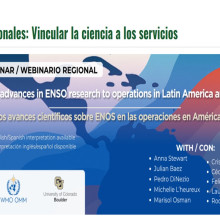
    Aplicación de los avances científicos sobre ENOS en las operaciones en América Latina y el Caribe

    Event date 3 يوليو '24 - 3 يوليو '25
    This event has type Webinar
    Read more about Aplicación de los avances científicos sobre ENOS en las operaciones en América Latina y el Caribe
  • Dieudonne ILBOUDO

    Dieudonne ILBOUDO created new community content in Global Community

    منذ 5 months
    Blog

    The Zaï Technique as a Pillar of Water and Soil Conservation

    Created on
    24 يونيو 2025 •
    كتبه
    Dieudonne ILBOUDO
    2
    0
    Read more about The Zaï Technique as a Pillar of Water and Soil Conservation
  • Dieudonne ILBOUDO

    Dieudonne ILBOUDO created new community content in Africa Community

    منذ 5 months
    Blog

    The Zaï Technique as a Pillar of Water and Soil Conservation

    Created on
    24 يونيو 2025 •
    كتبه
    Dieudonne ILBOUDO
    2
    0
    Read more about The Zaï Technique as a Pillar of Water and Soil Conservation
  • Pagination

    • Previous page Newer items
    • Older items
Contact us: clp@unccd.int
  • Privacy policy
  • Terms of use
Hosted on