
Pleased to share my Land Talks podcast episode with the UNCCD–G20 Global Land Initiative, where I discussed community-led restoration and practical solutions strengthening dryland resilience in Northern Nigeria.
Watch here on YouTube:
-
Mika’il Daya posted in Africa Community
2 months ago Public -
Mika’il Daya posted in Africa Community
2 months ago PublicAs the UN climate talks wrap up, one message stands out sharply for Africa: the continent cannot build real climate resilience without securing its drylands. These are the regions where climate change, land degradation, and biodiversity loss meet, where water is scarce, soils are fragile, and ecosystems are under pressure.
But these same drylands also hold Africa’s biggest opportunity. When we restore land, we also strengthen climate adaptation; when we protect biodiversity, we stabilize food and water systems; when we manage water wisely, we reduce drought risks and support livelihoods. This is the true convergence of land, climate, and nature.
Across the Sahel, the Horn, and Southern Africa, communities are already proving what works; water harvesting, drought-resistant crops, smarter grazing systems, and early warning tools that help farmers stay ahead of shocks.
The lesson from this COP is clear:
If Africa adapts its drylands, Africa adapts.
And that is where the continent’s climate future will be won.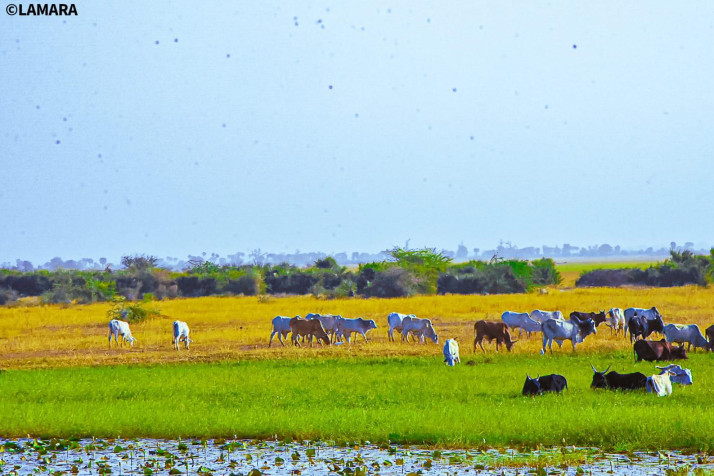
-
Mika’il Daya posted in Africa Community
2 months ago PublicAs drought events become more frequent and severe, the importance of proactive drought risk reduction continues to grow. Effective solutions require collaboration, knowledge exchange, and the engagement of diverse professionals working across sectors and regions.
The UNCCD Community of Learning and Practice (CLP) on Drought Management is a dynamic platform designed to bring together experts, policymakers, researchers, and practitioners to share insights, tools, and innovations that support resilient drought management.
By participating in the CLP, members gain access to:
- Practical guidance and technical resources
- Peer-to-peer learning and experience sharing
- Discussions on emerging approaches and best practices
- A global network committed to strengthening drought resilience
To broaden the impact of this important initiative,
We encourage all members to invite their networks to join the CLP.
A larger, more diverse community means stronger collaboration and deeper learning.Let us continue working together to support drought-resilient communities and sustainable land management.
Thank you!
-
Dieudonne ILBOUDO posted in Africa Community
2 months ago PublicExploring Challenges and Opportunities for Africa’s Landscapes – A Pathway to Mitigating Drought Impact
CLP Africa Webinar – November 12, 2025We extend our sincere thanks to all those who participated in the CLP Africa webinar held on November 12, 2025, which focused on the challenges and opportunities for African landscapes in the face of increasing droughts.
This exchange provided an opportunity to share scientific analyses, field experiences, and innovative approaches to strengthening climate resilience across the continent.
Watch the webinar again
You can now watch the full recording of the session on our YouTube channel:
Download the presentations
All documents and presentation materials used during the webinar are available for download in the dedicated Drive folder:
https://drive.google.com/drive/folders/1idsT0w8xR3-1oN3SA0i7WIrtE-IMksd…Thank you again for your participation and commitment to a more resilient future for Africa. Let's remain mobilized for the protection and restoration of our landscapes.
-
Suyu Liu posted in Africa Community
3 months ago PublicUsing systematic review and bibliography analysis to explore DLDD issues, as shown in this article, is interesting and can generate insights not easily available via other methods.
https://doi.org/10.1002/ldr.5617
Policy and Land Degradation Are Neglected in the Desertification, Land Degradation, and Drought Research Landscape in South Africa: Evidence From a Systematic Review and Bibliometric Analysisauthors: Bopaki Phogole, Mamadi Theresa Sethusa, Kowiyou Yessoufou
Abstract: Globally, issues related to desertification, land degradation, and drought (DLDD) are increasing, with a multitude of negative socioeconomic and ecological impacts reported. In particular, Africa is recognized as one of the regions that are most vulnerable to these negative impacts. In response, cross-country collaborations to mitigate and build resiliency to DLDD are promoted, with the United Nations Convention to Combat Desertification playing a central role. However, the scope of the current research landscape of scientific knowledge on DLDD in South Africa is unknown or not well documented, hampering well-informed policy development and actions. Through a thorough synthesis of over 970 research outputs on DLDD from 1928 to 2024, we found that the generation of existing knowledge is mostly led by two African universities with heavy collaborations with the northern hemisphere. We also revealed a recent but steadily increasing research interest in DLDD in South Africa, with relatively more interest in drought than land degradation and desertification, while policy and land restoration are glaringly neglected. These results have pertinent policy and programmatic relevance in South Africa, as they can be used to enhance the scope and relevance of DLDD research to adequately inform the design and implementation of interventions in the local and regional contexts. Thus, the mitigation and adaptation to the impacts of DLDD would be enhanced.
-
Dieudonne ILBOUDO posted in Africa Community
4 months ago PublicIn this CLP interview, I share insights on innovative drought resilience efforts. I discuss traditional techniques like Zai pits and Half Moons, as well as transforming invasive aquatic plants into valuable resources for local agriculture.
-
Dieudonne ILBOUDO posted in Africa Community
5 months ago Public𝑾𝒐𝒎𝒆𝒏, 𝑲𝒆𝒚 𝑨𝒍𝒍𝒊𝒆𝒔 𝒊𝒏 𝒕𝒉𝒆 𝑭𝒊𝒈𝒉𝒕 𝑨𝒈𝒂𝒊𝒏𝒔𝒕 𝑫𝒆𝒔𝒆𝒓𝒕𝒊𝒇𝒊𝒄𝒂𝒕𝒊𝒐𝒏 𝒊𝒏 𝑨𝒇𝒓𝒊𝒄𝒂
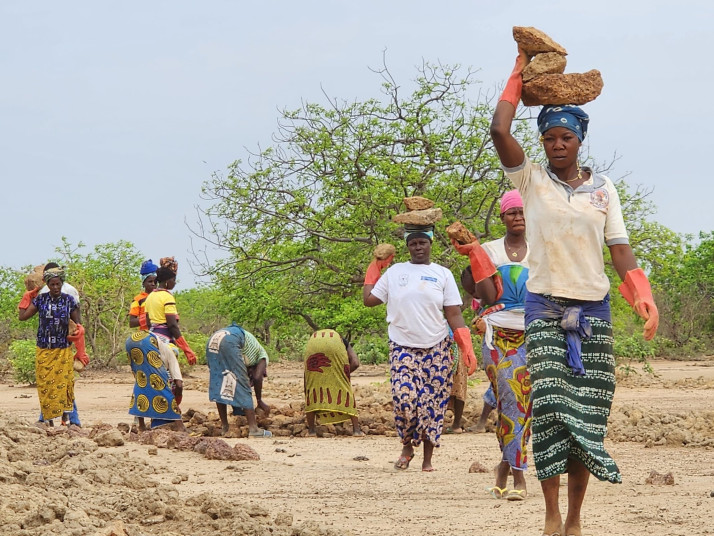
Desertification affects a large part of Africa and threatens food security, water resources, and the livelihoods of millions of people. Yet, at the heart of this struggle, one essential actor stands out : women.
𝑮𝒖𝒂𝒓𝒅𝒊𝒂𝒏𝒔 𝒐𝒇 𝒕𝒉𝒆 𝒍𝒂𝒏𝒅
In Africa, women produce up to 70% of local food. They cultivate, fetch water, preserve seeds, and know the soil better than anyone. This close relationship with nature places them on the front lines against the effects of drought and land degradation.𝑪𝒐𝒏𝒄𝒓𝒆𝒕𝒆 𝒔𝒐𝒍𝒖𝒕𝒊𝒐𝒏𝒔
Across the continent, women-led initiatives are transforming the fight against desertification:
• tree planting and agroforestry,
• farming techniques that retain water and restore soils,
• transforming invasive plants into organic compost, biochar, and biogas,
• turning local plants into income sources (honey, moringa, soap).
These actions revive the land and ensure the food security of communities.𝑶𝒃𝒔𝒕𝒂𝒄𝒍𝒆𝒔 𝒕𝒐 𝒐𝒗𝒆𝒓𝒄𝒐𝒎𝒆
Despite their central role, women rarely own the land they cultivate (less than 20% in sub-Saharan Africa). They also have less access to finance and training.𝑾𝒉𝒚 𝒊𝒏𝒗𝒆𝒔𝒕 𝒊𝒏 𝒘𝒐𝒎𝒆𝒏?
Studies show that giving women the same land rights and resources as men could reduce global hunger by 12 to 17% (FAO and Action Against Hunger). This demonstrates how crucial their involvement is for a sustainable future.In conclusion, women are pillars of resilience in the fight against desertification. By granting them more resources, rights, and recognition, we not only strengthen the battle against land degradation but also promote social justice and safeguard the future of generations to come.
-
Yusuf Maalim posted in Africa Community
6 months ago PublicHello Colleagues, My name is Yusuf Abdi Maalim, A Somali National. Am climate resilience expert based in the Horn of Africa. Am currently PhD program with University for Peace on Land Degredation and Desertification (LDD). Am currently serving as Senior Technical Advisor in the Ministry of Agriculture and Irrigation (MoAI) and also a program Director with SADAR Development & Resilience Institute based in Mogadishu, Somalia. SADAR Institute is currently implementing GEF & GAFSP funded program on Adaptive Agriculture and Rangeland rehabilitation program in Somalia.
-
Walid Madi posted in Africa Community
6 months ago Publichello everyone,
My name is Walid Madi, and I’m from Tunisia.
I am a forest and spatial planning engineer with a degree in Geo-information for Environmental Management. I’ve recently been admitted to the Master's program in Nature Conservation at the Faculty of Forestry, University of Sopron in Hungary.My interests focus on forest ecology, remote sensing, and the sustainable management of natural resources. I’m glad to join this community and look forward to learning from your experiences and sharing my own.
Thank you!
Madi Walid -
Dieudonne ILBOUDO posted in Africa Community
6 months ago PublicBiological Soil Crust (BSC), also known as biocrust is a living, thin layer of soil surface composed of communities of microorganisms such as cyanobacteria, algae, lichens, mosses, fungi, and other microbes, tightly bound with soil particles. These crusts play a vital ecological role in arid and semi-arid environments by stabilizing soil surfaces, reducing erosion, enhancing water retention, fixing atmospheric nitrogen, and facilitating seed germination. They improve soil fertility and structure by increasing organic matter and microbial diversity. Biocrusts are particularly important in fragile ecosystems where vegetation cover is sparse, acting as a protective layer that sustains soil health and biodiversity. However, they are highly sensitive to disturbance and take years or even decades to recover once damaged.
https://www.bosai-jp.org/en/solution/detail/89/order_list
https://www.researchgate.net/publication/360438331_Biological_soil_crus…


