
UNCCD Executive Secretary Yasmine Fouad meets COP16 Presidency in Riyadh on her first official mission
See the official link: https://www.unccd.int/news-stories/press-releases/unccd-executive-secre…
In particular, as shown by the official page, 'On drought resilience, the meeting followed up on the launch of the Riyadh Global Drought Resilience Partnership at COP16, emphasizing the need for a proactive, global approach to preparedness and response, and for strong policies that support vulnerable communities and ecosystems'.
-
Suyu Liu posted in Asia Community
há 3 months atrás Público -
Suyu Liu posted in Asia Community
há 3 months atrás Público10th Kubuqi Int'l Desert Forum opens with focus on scientific approach in desertification control (by Zhao Yusha in Ordos, published on Global Times on 16 Sept 2025 at this link: https://www.globaltimes.cn/page/202509/1343628.shtml)
The 10th Kubuqi International Desert Forum opened Tuesday in Ordos, North China's Inner Mongolia Autonomous Region. China's outstanding achievements in combating desertification took center stage, with 13.3 million hectares restored over the past five years, putting the country ahead of its 2030 goal of zero net land degradation.
Themed "Scientific Desertification Control, Green Development," this year's forum drew approximately 200 participants from home and abroad, including foreign dignitaries, UN representatives, diplomats from countries severely affected by desertification, government officials, experts, scholars and entrepreneurs.
Since the start of the 14th Five-Year Plan (2021-25), the Three-North Shelterbelt Forest Program (TSFP), the world's largest afforestation project has carried out comprehensive desertification control over more than 200 million mu (about 13.3 million hectares), the Global Times learned at the forum. Both desertified and sandy land areas have continued to shrink, and the country has also taken the lead in realizing the 2030 goal of zero net land degradation.
Wind erosion across China's eight major deserts and four major sandy regions has dropped about 40 percent since 2000. Vegetation now covers an average of 20.22 percent of the land — up 2.6 percentage points from a decade ago. And over the past 10 years, the frequency of sandstorms has declined by 30 percent compared with the previous decade, according to data from China's National Forestry and Grassland Administration at the forum.
China has also sought to pair ecological restoration with economic development. Sandy areas now produce about 48 million tons of fresh and dried fruit annually—roughly a quarter of the national total—worth 120 billion yuan ($16.5 billion). In several key regions, income from forestry and fruit production make up more than half of farmers' net earnings.
In a video addressing the opening ceremony, Yasmine Fouad, executive secretary of the United Nations Convention to Combat Desertification (UNCCD), said that land degradation is threatening our planet at an alarming rate. Every year, 100 million hectares are lost — equivalent to four football fields -- every second.
"The question is not whether the world can act, but whether we will. And here in Kubuqi, you have answered with a resounding yes," Fouad said. She noted that the Kubuqi model teaches a fundamental truth: When we restore our land, we restore human dignity. It means jobs — over 100,000 of them. It means new industries that sustain families. It means communities that no longer see the desert as an adversary, but as a partner in their future. This transformation, she stressed, was not the work of one sector alone.
Speaking at the opening ceremony, Byambasuren Oyunsanaa, head of Mongolia's Forestry Department, said that Mongolia, as one of the most climate - vulnerable countries, faces pressing challenges from desertification and land degradation. He added that in recent years, Mongolia has prioritized land restoration, climate change, and sustainable livelihoods, such as the launch of "One Billion Trees" national campaign, to restore the fragile landscapes.
He noted that in recent years, the Kubuqi International Desert Forum has become a key venue for addressing the pressing challenges of desertification, land degradation, and climate change, contributing to new international initiatives and innovative solutions.
Founded in 2007, the Kubuqi International Desert Forum is the world's only large-scale international forum dedicated to fighting desertification and advancing the green economy, Xinhua reported.
Over nine previous sessions, it has become a key platform for showcasing China's achievements in desertification control, deepening global cooperation, and supporting the high-quality development of the Belt and Road Initiative.
This year's forum seeks to promote international exchanges on desertification control and ecological civilization, share China's experience, and contribute to building a community with a shared future for humanity.
During the forum, Rokiatou Traoré, UNCCD land hero and executive manager of Herou Alliance, told the Global Times that "I think it's remarkable, because China has shown the world that it is actually possible to turn deserts into oases. By mobilizing different ministries, harnessing technology, and working with rivers, mountains, and even the wind, China has made it happen."
"It's a joint effort to truly transform deserts into oases. I sincerely hope every country can follow this commitment and example, and work to turn deserts around the world into oases, just as China has done," said Traoré.
"China has some of the largest and fastest reforestation projects in the world. Brazil, my country, is a leader in technologies for restoring native forests. Our two countries have been discussing how to create synergies and make better use of these complementary technologies. That's one of the reasons I'm here — to better understand Chinese technologies and how they could also help Brazil achieve our goals," said Luiz Keppe, second secretary at Brazil's Embassy in China, told the Global Times.
In addition, Keppe said he found China's fire monitoring and firefighting technologies impressive. "That's something that could definitely help Brazil. The broader monitoring systems I saw here would also be very useful," he said.
-
Suyu Liu posted in Asia Community
há 4 months atrás Públicohttps://doi.org/10.1016/j.gfs.2025.100874
this is an interesting article published on Global Food Security
Revisiting the drought-food insecurity nexus: a social-ecological systems perspective -
Laith Ali Naji posted in Asia Community
há 4 months atrás PúblicoHow Smart Tech Is Helping Catch Precious Water That’s Flowing Away
Imagine a huge pipe network under your city, carrying water to people’s homes. Now picture one-third of that water (enough to fill thousands of swimming pools) just vanishing into leaks, theft, or bad bills every year. Fixing leaks with traditional methods can feel like searching for a needle in a haystack. It’s costly, slow, and often misses hidden issues. Even worse, analyzing data by hand is error-prone and overly complex for many teams to manage (UNDP).
📖 You can read more and join the discussion in the Community at the UNCCD CLP platform:
👉 https://lnkd.in/egPbpgBFHere’s where smart, data-powered tools come in (think of them as super-sleuth gadgets for water systems). Two technologies team up to make this happen:
1. Internet of Things (IoT), which is like putting tiny, connected sensors (smart meters) across the water pipes, watching how much flows and how fast, around the clock.
2. Artificial Intelligence (AI) that is like teaching a computer to spot unusual patterns—such as pressure dropping in the middle of the night or flow spiking in one spot.Together, these tools turn data into clues. They help water teams find trouble spots quickly and accurately (without sending field crews everywhere).
UNDP’s Accelerator Lab worked with the startup FlowLess to test this smart system, so it was much cheaper than expensive foreign alternatives and adapted to different local water networks and needs, and the team remained open to feedback and improvements.
📖 You can read more and join the discussion in the Community at the UNCCD CLP platform:
👉 https://lnkd.in/egPbpgBF
Read more:
👉https://lnkd.in/e3h_E-gh
👉https://lnkd.in/eYcKxv4P).
-
Laith Ali Naji posted in Asia Community
há 4 months atrás PúblicoIn the face of growing drought across West Asia, Saudi Arabia emerges as a success story
📖 You can read more and join the discussion in the Community at the UNCCD CLP platform:
👉 https://lnkd.in/egPbpgBFAccording to UN-Water, Saudi Arabia is rapidly accelerating SDG-6 progress through a powerful mix of policy, partnerships, and innovation:
📊 97% of the population now has access to safely managed drinking water
📈 100% urban wastewater is collected, more than 60% of it is safely treated and reused
🔧 AI-driven leak detection helped reduce non-revenue water to 23%, down from previous levels near 30%
🌊 Through public-private partnerships, Saudi Arabia operates the world’s largest desalination capacity, producing over 9 million m³/day
Saudi Arabia proves that even in one of the world’s driest regions, water security is possible when Vision 2030, strong governance, private sector engagement, and smart technologies work together.
📖 You can read more and join the discussion in the Community at the UNCCD CLP platform:
👉 https://lnkd.in/egPbpgBF
📖 The link of UN-Water:
👉 https://lnkd.in/ekhiNbTK -
Laith Ali Naji posted in Asia Community
há 4 months atrás PúblicoHow to get portable water in rural areas
Imagine this…
You’re in a barren place. No electricity, no equipment, and no ready-to-drink water. What would you do to secure water with the few resources you have?
Here are some simple, practical ideas:1- Purifying salty or dirty water with a simple solar still
Find any glass or transparent plastic sheet and a box (preferably a wooden box). put the water inside, and place the sheet at a 30–45° angle on top of the box. The sun will evaporate the water, and it will condense on the sheet. The drops will slide down into a small channel and collect in a clean container.
This can produce around 5–10 liters of clean water per day, depending on the sheet size.Just remember to clean the sheet from dust and the box bottom from salt deposits.
📖 You can read more and join the discussion in the Community at the UNCCD CLP platform:
👉 https://lnkd.in/egPbpgBF2- Extracting water from the air
Dig a hole in the ground and place a metal or plastic pipe inside. Let air flow through it. Temperature differences between the ground and the air will cause water vapor to condense inside the pipe.
If you have a small fan powered by wind, you can attach it to increase airflow.3-Collecting dew and fog using a mesh
Set up a mesh (plastic) in an open area, especially in mountainous or coastal regions. At night, as temperatures drop, water vapor will condense on the mesh and drip into a container or small pipe below.4- Air well to condense moisture
If you have stones or bricks, arrange them into a small tower or stone chamber with gaps. At night, the stones cool down, and during the day, moist air passing through will condense on them, dripping water to the base.


-
Laith Ali Naji posted in Asia Community
há 4 months atrás PúblicoIf you have an impactful drought resilience project, now is your chance to shine! Winners will receive travel support to present at the UNCCD CRIC 23 in Panama (December 2025), be featured in official UNCCD publications and platforms, and gain global recognition for their solutions.
Submit your case study by September 17, 2025.
The link: https://lnkd.in/g3nX4qBd

-
Laith Ali Naji posted in Asia Community
há 5 months atrás PúblicoWhy Rainfall Frequency Matters More Than You Think
A new study published in Nature Communications (2025) shows that less frequent rainfall (not just less total rain) can lead to earlier autumn leaf senescence (leaf aging and fall) across the Northern Hemisphere.
When rain events become less frequent:
Soil moisture drops
Air becomes drier (higher vapor pressure deficit)
Plants shed their leaves earlier due to increased drought stress
They also acclimate faster to drought, which shortens their growing seasonPerhaps most importantly, the study found that many global climate models fail to capture this effect, missing a critical piece of how ecosystems respond to climate change. Climate and vegetation models must consider how often it rains, not just how much. This could greatly improve our predictions of future ecosystem health and carbon dynamics.
📖 The link of study:
👉 https://lnkd.in/e-V2MPVw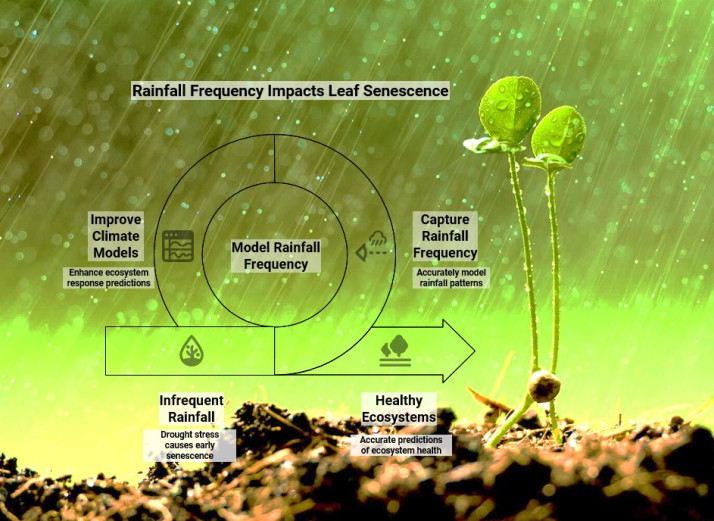
-
Suyu Liu posted in Asia Community
há 5 months atrás PúblicoAsian Disasters Preparedness Center (ADPC) is recruiting a few national consultants to support its work in South Asia (e.g. Pakistan and Nepal).
See the link here: https://www.adpc.net/ver25/vacancies-index.asp?contract=ConsultantADPC is a collaborator of UNCCD. An output is the development and launch of The Regional Drought Risk Management and Mitigation Strategy for South Asia in UNCCD COP 16 (2024). https://www.preventionweb.net/publication/regional-drought-risk-managem…
-
Laith Ali Naji posted in Asia Community
há 6 months atrás PúblicoThe Risk of PFAS in Iraq’s Groundwater Amid Drought: Insights from Asia-Pacific Experiences
Because of the ongoing drought, many people in Iraq have no choice but to consume groundwater without realizing the potential risks of Per- and polyfluoroalkyl substances (PFAS) contamination. PFAS, often called “forever chemicals,” are a growing global concern due to their persistence in the environment and potential health risks. While many countries are still catching up in addressing PFAS pollution, several Asian countries are taking concrete steps to monitor, regulate, and reduce PFAS in the environment. Asia-Pacific countries are increasingly addressing PFAS ("forever chemicals") through regulations mainly aligned with the Stockholm Convention, which restricts certain PFAS substances such as PFOS, PFOA, and PFHxS. Key points include:
1- China, Japan, and South Korea have adopted restrictions on PFAS listed in the Stockholm Convention. China is enhancing broader chemical regulations, including a 2023 List of New Pollutants for Priority Management [1].
2- Japan has been proactive, since 2009, PFOS is regulated as a Class I Specified Chemical Substance, with export restrictions. In 2020, Japan set a drinking water target of 50 ng/L for PFOS and PFOA and banned their manufacture and use [7].
3- Southeast Asian countries such as Vietnam, Thailand, Singapore, Malaysia, and the Philippines have documented widespread PFAS contamination in water, soil, and biota, with ongoing concerns about human and ecosystem health. However, regulatory frameworks remain weak or poorly enforced in many of these countries [5][6].
In Iraq, PFAS pollution is not yet a visible part of water management strategies, and current efforts are limited to occasional workshops for university staff. However, with ongoing drought and increasing reliance on untreated groundwater in urban peripheries, the risk of PFAS contamination in drinking water will only grow. Early action is essential. Drawing from Asia’s experiences, Iraq can consider:
1- Establishing a national PFAS monitoring program, starting with pilot studies in industrial and military areas.
2- Developing laboratory capacity and training for PFAS testing using GC-MS instruments.
3- Including PFAS in national water quality and environmental protection regulations.
4- Collaborating with regional and international partners to develop cost-effective removal and monitoring methods.Reference
[1] https://www.idtechex.com/en/research-article/new-regulations-targeting-…
[2] https://www.sciencedirect.com/science/article/abs/pii/S0013935121004163
[3] https://ipen.org/documents/pfas-pollution-across-middle-east-and-asia
[4] https://www.sciencedirect.com/science/article/abs/pii/S2352801X23000474
[5] https://www.frontiersin.org/journals/toxicology/articles/10.3389/ftox.2…
[6] https://ipen.org/news/pfas-situation-reports-twelve-middle-eastern-and-…
[7] https://int.anteagroup.com/news-and-media/blog/pfas-regulation-around-t…
[8] https://www.3eco.com/article/2025-asia-pacific-regulatory-landscape-3e/
[9] https://landandgroundwater.com/global-pfas-regulatory-developments/
