
跳转到主要内容
TranslateTranslate
    • Select a language:

User account menu

  • My Account 用户菜单
Hosted on
  • Overview
    • Home
    • Co-Chairs
  • Communities
  • Drought Toolbox
  • Online Learning
  • Cases
    • Case Studies
    • Case Study Competition Winners
    • Photo Exhibition
UNCCD Communities

Asia Community

Request to join

主标签

  • 关于
  • Stream(活动标签)
  • Materials
  • 事件
  • Discussions
  • Opportunities
  • 成员

Membership Notice

You are not a member of this community, which means you can view parts of it (according to community policy or permissions set per content). You cannot interact with it (like, post comments or add new content), unless you become its member. To do so, you need to request to join or be invited, after logging in.

Chairs and co-chairs

Suyu Liu
Expert in drought
,
Sustainable Development and SDG Indicators
Sara Riade
Consultant
,
UNCCD
Salman Zare
Assistant Professor
,
University of Tehran
‪Laith ‬‏ Ali Naji
Environmental Engineer
,
Ministry of Environment
  • Suyu Liu posted in Asia Community

    1 month 之前 可见性 公开

    A brief from National University of Singapore
    https://www.isas.nus.edu.sg/papers/prolonged-drought-in-nepals-plains-c…

    Prolonged Drought in Nepal’s Plains: Causes, Effects and Remedies

    by Puspa Sharma

    4 August 2025

    Previous Next
    Summary

    The current prolonged drought in Nepal’s Madhesh Province is a result of both local environmental destruction and climate change. Nepal needs to initiate serious reforms to undo the local environmental damages and make its case for global climate justice.

    Nepal’s Madhesh Province has been experiencing prolonged drought this monsoon season. There is a severe lack of drinking water. Water unavailability for even basic household needs indicates that the plantation of rice – the staple of most Nepalis – has been disrupted. Rice has been planted in only about 50 per cent of the rice planting area in the province. In areas where plantations have been made, the fields have gone dry.

    Due to its significant contribution to national rice production, the Tarai/Madhesh region is commonly referred to as the granary of Nepal. There could be a significant reduction in Nepal’s rice production this year. This does not bode well for the country’s food security and farmers’ livelihoods.

    The provincial government of Madhesh Province has declared the province as drought-affected. It distributed drinking water through tankers and fire trucks. Given the precarious situation, the federal government has declared Madhesh Province a disaster-hit zone. Nepal’s Prime Minister K P Sharma Oli took an aerial survey of the drought-affected districts. He announced immediate installations of 500 deep-bore wells in several places of the affected region.

    Why is Nepal’s Madhesh Province facing such an unprecedented crisis? There are two key reasons.

    The first is the lack of adequate rainfall in the region this monsoon. Contrary to forecasts that Nepal would experience unusually high rainfall this season, there has been extremely little rainfall, notably in the Tarai/Madhesh region. The prime factor for this is probably climate change. Even weather forecasts have become more erratic.

    The second is the depletion of underground water, which is a prime source for both household use and irrigation. The Tarai/Madhesh region has experienced a gradual depletion of groundwater levels over the past decades for several reasons. The most important of them is the destruction of the Chure region.

    The Chure hills, also called the Siwaliks, lie immediately north of the Tarai/Madhesh plains. The average elevation of these hills is about 1,000 metres. The Chure region mostly consists of forests and plays a most significant role in maintaining the Tarai/Madhesh’s ecological and environmental balance. It gets more rainfall compared to the Tarai/Madhesh region. Moreover, the soft rocks and soil of the Chure region enable good rainwater absorption and groundwater recharge. Thus, the region is the main source of surface and groundwater for downstream areas in Tarai/Madhesh.

    Over the past few decades, activities such as deforestation for infrastructure development (mainly road constructions) and human settlements in and around the Chure region have resulted in massive destruction of Chure’s ecology. The most destructive of all the activities has been the uncontrolled and haphazard extraction of sand, gravel and boulders from and around the Chure region, whether legally or illegally. Such extractions have disturbed the natural water absorption and recharging process over many years, which has caused the current dry conditions in Madhesh Province.

    Environmental impacts of uncontrolled mining of sand, gravel and boulders from the Chure region have long been identified in Nepal. This had invited enormous debates in the past, particularly when the government announced the extraction and export of these materials to generate revenue. Several local governments have also encouraged these activities for revenue generation purposes.

    In 2009, under the initiation of the then President Ram Baran Yadav – the first President of the Republic of Nepal and who hails from Madhesh Province – the government initiated the President Chure-Conservation Programme. This was followed by the setting up of the President Chure-Terai Madhesh Conservation Development Committee in 2014. The Committee prepared the Chure Conservation Masterplan. In the initial years after the formation of the Committee and the release of the Masterplan, there were high hopes that this initiative would halt Chure’s destruction. However, after a few years, the initial momentum lost pace. The destructive activities continued unabated. A strong nexus between contractors and politicians with corrupt intentions are said to be among the major reasons for the continued destruction of the Chure region.

    To address Madhesh Province’s drought crisis, the major, long-term solution is to complete halt Chure’s destruction. It is also essential to restore Chure’s ecology. If the government is fully committed, it can bring an end to the extraction activities immediately. Restoring Chure’s ecology might take some time.

    To respond to the current crisis, the government might have found the installation of deep bore wells as the most effective means to provide immediate relief to the affected people in Madhesh Province and, hence, decided accordingly. However, several experts and environmentalists have rightly been sceptical about this measure and warned the government that this could be counterproductive. Due to the massively receded aquifers, it is uncertain whether and how many deep bore wells would be able to function successfully. Even if some of them will be able to reach the aquifers and pump out water, they will further deplete the already receded water table underground. This could further jeopardise the drought conditions in the region in the years to come. Perhaps it is high time to rethink the agricultural development model.

    Climate change is certainly an important factor in the current crisis. This is set to worsen in the years ahead. The major climate change contributors should also bear their share of responsibility in addressing the current crisis. When Nepal initiates reforms to address the local conditions that have caused the crisis, it will have a stronger moral standing in making its case for climate justice globally.

    Total amount of likes
    1 like
    Dislike 0
  • Suyu Liu posted in Asia Community

    1 month 之前 可见性 公开

    This is an interesting article, fulltext here: https://doi.org/10.1029/2025EF005971

    A Tale of Two Unprecedented Droughts in Southeast Asia: Physical Drivers and Impending Future Risks

    Authored by: Shuping Ma, Xiao Peng, Xinyue Liu, Zhongwang Wei, Zhixiao Niu, Wenpeng Zhao, Ming Pan, Xiaogang He

    Abstract: Conventional wisdom suggests that tropical droughts in Southeast Asia are closely linked to natural climate variability like El Niño. However, the extreme 2014 drought occurred independently of El Niño, suggesting other dynamic forcings at play. Here we use moisture budget analysis, moisture tracking, and physics-informed joint probability modeling to disentangle the interplay between dynamic and thermodynamic drivers behind this unprecedented drought and to assess future drought risks under climate change. We find that the 2014 drought primarily resulted from air subsidence due to anticyclone-driven mid-troposphere divergence, leading to significant precipitation deficits, which are further intensified by reduced marine moisture inflow from the West Pacific. Incorporating the dynamic and thermodynamic drivers into our bivariate probabilistic analysis, we find that the likelihood of 2014-like droughts will increase by 25% and 43% under stabilized and business as usual pathways, respectively, by mid-century (2030–2064). Such increases in drought risk are dominated by climate-change-induced changes in dynamic processes, particularly reduced mid-troposphere vertical motion, where thermodynamic processes and the dependence structure between the two play a less significant role. However, significant inter-model inconsistence in attributing the relative importance of these factors highlights the challenges of using current climate models for robust risk assessment.

    Plain Language Summary
    In early 2014, Southeast Asia experienced an extreme drought. Our analysis explores the role of the intricate interplay between dynamic and thermodynamic processes in drought formation. We find that the probability of experiencing droughts similar to the 2014 event increases by 25% under the SSP126 scenario compared to historical likelihood, and under the SSP585 scenario, this increase is even more pronounced at 43%, when employing vertical motion and relative humidity to describe the combined effect of the thermodynamic and dynamic processes. Overall, we anticipate a significant increase in the frequency of extreme drought conditions under more severe warming scenarios, with the dynamic factors mainly contributing to the increased likelihood of 2014-like droughts in the future.

    Key Points

    We explore the intricate interactions among the physical mechanisms that contribute to the historic 2014 Southeast Asia drought

    The extreme drought, characterized by the interplay of vertical motion and relative humidity, has a “likely” return period of 95 years

    The frequency of extreme drought conditions will increase by 25% and 43% under future scenarios, with dynamical factors playing a key role

    Total amount of likes
    1 like
    Dislike 0
  • Salman Zare posted in Asia Community

    2 months 之前 可见性 公开

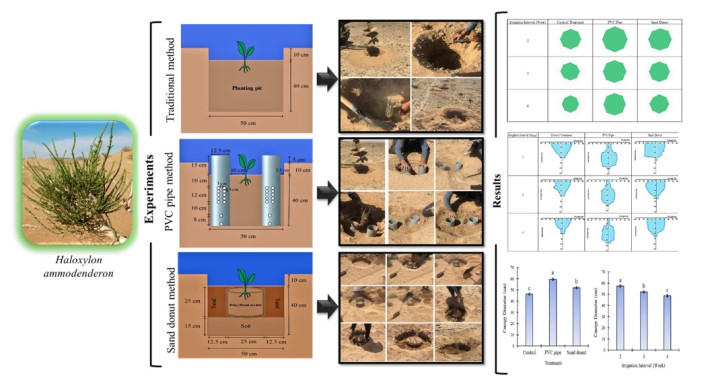
    A New Approach to Improving Drought Resilience in Desert Ecosystem Restoration
    Recurring drought and accelerating desertification are placing increasing pressure on dryland ecosystems, leading to reduced vegetation cover, soil degradation, and the decline of essential ecosystem functions. Under these conditions, ecological restoration—ranging from soil stabilization to the re-establishment of protective plant cover—has become both urgent and increasingly challenging due to limited water availability.
    One practical response to this challenge is the use of deep root-zone irrigation, a technique that delivers water directly to subsurface soil layers where plant roots are most active. By reducing surface wetting, this approach helps limit water losses through evaporation and runoff while improving plant access to moisture under drought conditions.
    Building on this concept, our research team has applied the pipe method as a targeted deep-irrigation solution. In this method, irrigation water is conveyed through a perforated pipe and released within the root zone, creating a deeper and more stable moisture distribution compared with conventional surface irrigation. This results in more efficient water use, improved soil moisture conditions, and stronger plant establishment in water-limited environments.
    The findings show that the pipe method can contribute to more resilient restoration outcomes by combining water savings with improved plant performance.
    Details of this work have been published in the journal Land Degradation & Development.
    https://doi.org/10.1002/ldr.70076

    Total amount of likes
    3 likes
    Dislike 0
  • Edgar E. Gutierrez-Espeleta posted in Asia Community

    2 months 之前 可见性 公开

    An interesting article worthwhile reading: https://agupubs.onlinelibrary.wiley.com/doi/10.1029/2024EF005565

    Total amount of likes
    4 likes
    Dislike 0
  • Edward Huang posted in Asia Community

    2 months 之前 可见性 公开

    Great Green Wall in China -- I'm sharing a video titled "How China turned the desert into green forests" with an impressive story about ecosystems transformation with a large-scale master-planned forestation over vast desert lands to combat desertification in China. I've learned a bit more everytime when I read info about this "Great Green Wall" project, and hope you'll enjoy this one. I'm spreading it as part of my actions to take part in the UN World Soil Day 2025. The link goes: https://www.msn.com/en-us/news/world/how-china-turned-the-desert-into-g…

    Total amount of likes
    1 like
    Dislike 0
  • Edward Huang posted in Asia Community

    2 months 之前 可见性 公开

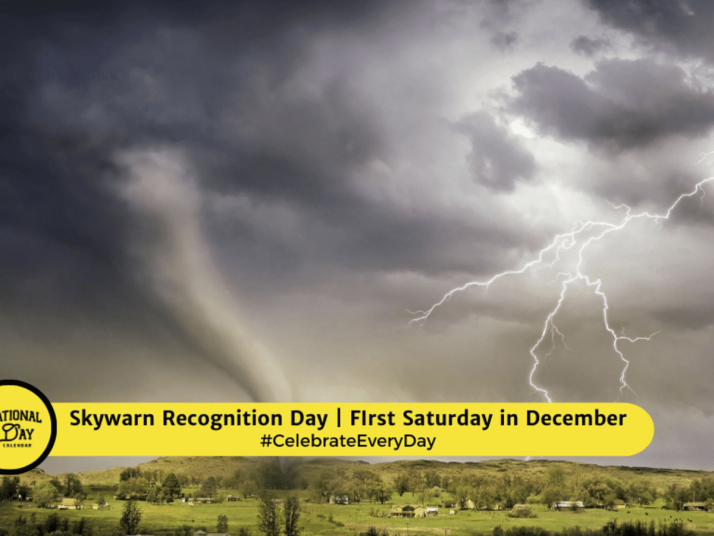
    SKYWARN actions kickoff on Skywarn Recognition Day 2025
    Today, December 6, is the SKYWARN Recognition Day (SRD) in the US. While the NOAA’s National Weather Service (NWS) cancelled the SRD 2025, as a registered Official Skywarn Spotter and a SciStarter participant in the SKYWARN citizen science project stationed at the Arcadia Ecohome in the foothill community of Arcadia, California, I'm taking on a weeklong voluntarily sky-watch of the San Gabriel Mountains, a desert mountain range just north of Arcadia, as part of my actions to take part in the celebrations of both the 2025 SRD on December 6, the first Saturday of December, and International Mountain Day on December 11, along with reporting and advocacy activities such as this writeup. Monitoring the sky over desert mountains in Southern California where unusual winter wildfires have occurred in recent years, such as the devastating ones in January 2025, driven by extreme drought and heat after wet years and strong Santa Ana winds, is becoming critical in the era of climate new normal with hazardous windstorms and firestorms for our attentions and actions as members of the Skywarn Weather Spotters Network and the Fire Adapted Communities Network (FAC Net).

    Total amount of likes
    0 likes
    Dislike 0
  • Edward Huang posted in Asia Community

    2 months 之前 可见性 公开

    Soil properties and soil biodiversity play significant roles in land degradation, especially in arid regions. Today is the UN World Soil Day (WSD) 2025 themed "Healthy Soils for Healthy Cities”. As an urban farmer and a USEPA recognized Qualify Water Efficient Landscaper (QWEL) working at the Arcadia Ecohome’s micro-agroforest, a Certified Bee Friendly Farm and a listed Climate Victory Garden, located in the arid Southern California, I’ve registered a local event with FAO to support the global celebrations of WSD. Our key actions taken today is focused on improving soil properties and biodiversity to combat land degradation with actions to add organic matters from fallen leaves, tree trimmings & food wastes to the forest floor through composting so as to enhance the soil sponge’s functions of taking and keeping moisture from cool night dews, to harbor a bio-diversified forest-floor inhabitants such as insects, earthworms & microbes who contribute to build healthy soils, to induce root growth for reducing soil erosion, and to minimize green & food wastes generated in urban areas to be hauled to remote desert landfills. The photo taken today (sorry, cannot be uploaded) shows sheet composting of fallen leaves all over the forest floor, pile composting of twigs & branches by tree roots and an in-ground composting of kitchen wastes, all for building healthy soils by nature-based solutions. I’m sharing what we do at CIEDM with our networks, especially my follow members in the United Nations Convention to Combat Desertification (UNCCD) Communities of Learning and Practice, as part of our grassroots actions in social media campaign for WSD.

    Total amount of likes
    2 likes
    Dislike 0
  • Edward Huang posted in Asia Community

    2 months 之前 可见性 公开

    Thanks for Suyu's warm welcome! As a new member of this community, I'm delighted to briefly introduce myself: I'm an academic and practitioner in the field of urban and environmental planning, with an interest in nature/resources/water conservation. I've lived and worked for 40+ years in the Los Angeles metropolitan area, a part of the arid US Southwest region, and on daily basis encountered/crossed challenges and news about drought, heatwaves, wildfires, flash floods and other climate issues in this region and beyond. With my Chinese ethnic origin, growup in Taiwan, and work & travel experiences in several parts of Asian, including serving as a faculty member in Saudi Arabia and China, I'm glad to be here to share and learn with all of you in this community.

    Total amount of likes
    1 like
    Dislike 0
  • ‪Laith ‬‏ Ali Naji posted in Asia Community

    3 months 之前 可见性 公开

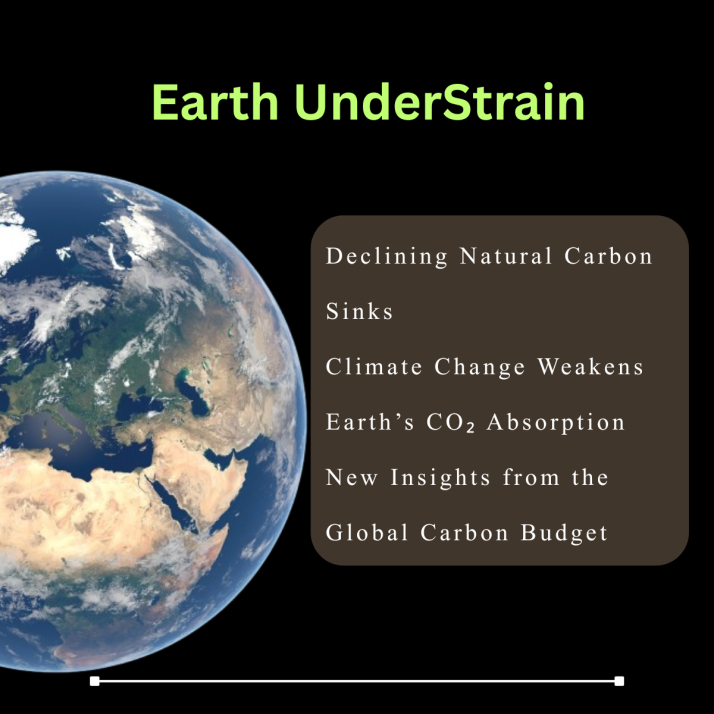
    New insights on declining natural carbon sinks

    A new study published in Nature highlights how climate change and land-use pressures are reducing the Earth’s ability to absorb CO₂. The findings show that natural land sinks are weakening, while tropical forests in Southeast Asia and South America are shifting from carbon sinks to carbon sources, a trend driven by warming, drought, and deforestation.

    Understanding these changes is essential for effective climate and drought management strategies.

    Join the conversation and explore how stronger land stewardship and climate-resilient practices can support global mitigation efforts.

    👉 Learn more and connect with the CLP community:
    https://lnkd.in/ey3rv9Ga

    👉Read more:
    https://lnkd.in/eFrzCvbk

    #UNCCDCLP #DroughtManagement #CommunityOfPractice #LearningCommunity #Desertification#LandDegradation #UNCCD
    #Resilience #ClimateAdaptation #SustainableLandManagement #PeerLearning

    Total amount of likes
    2 likes
    Dislike 0
  • Suyu Liu posted in Asia Community

    3 months 之前 可见性 公开

    This is an interesting article. Some people have the instinct that Pacific islands should have enough water due to their location (central in the ocean), but actually they also suffer from drought. This suggests that drought is indeed global and can affect all countries.

    https://www.mdpi.com/2225-1154/13/9/172

    Drought Monitoring to Build Climate Resilience in Pacific Island Countries
    by Samuel Marcus, Andrew B. Watkins, andYuriy Kuleshov

    Climate 2025, 13(9), 172; https://doi.org/10.3390/cli13090172
    Submission received: 21 July 2025 / Revised: 20 August 2025 / Accepted: 22 August 2025 / Published: 26 August 2025
    (This article belongs to the Special Issue Global Warming and Extreme Drought)

    Abstract: Drought is a complex and impactful natural hazard, with sometimes catastrophic impacts on small or subsistence agriculture and water security. In Pacific Island countries, there lacks an agreed approach for monitoring agricultural drought hazard with satellite-derived remote sensing data. This study addresses this gap through a framework for agricultural drought monitoring in the Pacific using freely available space-based observations. Applying World Meteorological Organization’s (WMO) recommendations and a set of objective selection criteria, three remotely sensed drought indicators were chosen and combined using fuzzy logic to form a composite drought hazard index: the Standardised Precipitation Index, Soil Water Index, and Normalised Difference Vegetation Index. Each indicator represents a subsequential flow-on effect of drought on agriculture. The index classes geographic areas as low, medium, high, or very high levels of drought hazard. To test the drought hazard index, two case studies for drought in the western Pacific, Papua New Guinea (PNG), and Vanuatu, are assessed for the 2015–2016 El Niño-related drought. Findings showed that at the height of the drought in October 2015, 58% of PNG and 72% of Vanuatu showed very high drought hazard, compared to 6% and 40%, respectively, at the beginning of the drought. The hazard levels calculated were consistent with conditions observed and events that were reported during the emergency drought period. Application of this framework to operational drought monitoring will promote adaptive capacity and improve resilience to future droughts for Pacific communities.

    Total amount of likes
    3 likes
    Dislike 0
  • 分页

    • Load More
Contact us: clp@unccd.int
  • Privacy policy
  • Terms of use
Hosted on