




I am pleased to share that I have received my certificate from the online course "Drought Risk and Impact Assessment," delivered by UNCCD, WMO, and the Global Water Partnership (GWP). This training has strengthened my skills in drought risk and impact assessment, quantitative and qualitative analysis, understanding cascading and compound risks, and impact-based early warning systems. I strongly encourage professionals in the water, agriculture, climate, and development sectors to take this training to better anticipate and mitigate the impacts of drought. Together, let's build resilience to drought.
https://droughtclp.unccd.int/course/drought-risk-and-impact-assessment
-
Mika’il Daya created a new resource in Africa Community.
-
Mika’il Daya created a new resource in Africa Community.
-
Dieudonne ILBOUDO posted in Africa Community
il y a 2 weeks Public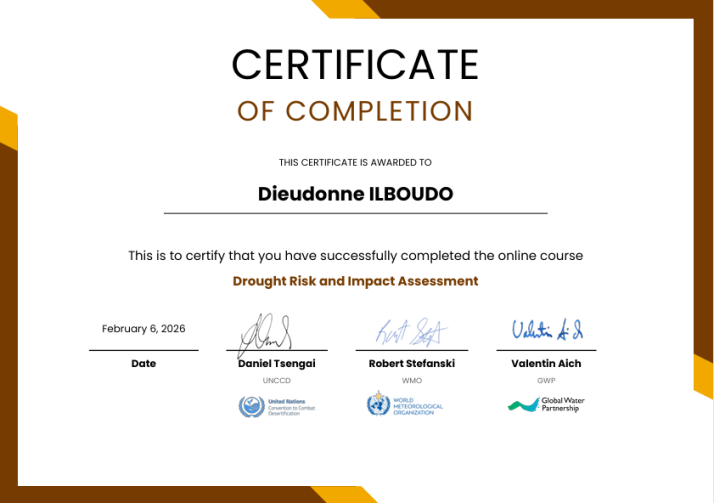
-
Suyu Liu posted in Africa Community
il y a 1 month PublicBicycles help Zambian farmers push out through deought
see this news on The Times: https://www.thetimes.com/uk/education/article/zambian-farmers-conservat…
-
Dieudonne ILBOUDO posted in Africa Community
il y a 1 month PublicThe importance of hedgerows in combating desertification
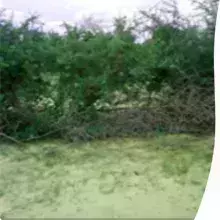
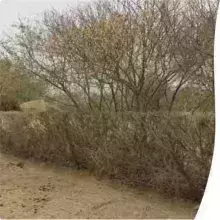
A hedgerow is a dense, continuous linear formation consisting of one or more rows of shrubs around a site to be protected from animals and other threats. It plays a vital role in the fight against desertification by protecting soils from wind and water erosion, improving soil fertility, and conserving moisture. They act as natural barriers that reduce land degradation, enhance biodiversity, and create favorable microclimates for crops and livestock. By stabilizing ecosystems and supporting sustainable land management, living hedges contribute significantly to the resilience of rural landscapes and communities facing climate change.
1. Objectives
The establishment of hedgerows aims to contribute sustainably to combat desertification in the Sahel region through the following objectives :
Protecting production areas (gardens, orchards, cultivated fields) from stray livestock and associated damage ;
Demarcating and securing agricultural land, plots, access corridors, and developed areas to reduce land pressure ;
Effectively combating wind and water erosion by reducing wind speed and water runoff;
Reducing deforestation and illegal logging through a renewable plant source ;
Preventing and mitigating land and agropastoral conflicts related to access to and use of land and natural resources;
Restoring degraded land and improving the resilience of agrosilvopastoral systems to the effects of climate change.2. Context and Environmental Conditions
Hedgerows are a proven soil and water conservation technique, widely used in Sahelian agropastoral zones characterized by annual rainfall between 300 and 600 mm.
In these fragile environments, highly exposed to desertification, hedgerows help to slow desertification, stabilize soils, protect crops, and promote vegetation regeneration. They thus constitute a sustainable, low-cost solution adapted to local knowledge for integrated land management.3. Implementation Steps
The establishment of hedgerows follows a gradual process adapted to the local agricultural calendar:
Production of seedlings in a nursery using species adapted to local climatic conditions;
Marking planting lines for optimal spatial organization;
Soil preparation and digging of planting holes (April–May) to anticipate the rainy season;
Transportation of seedlings to planting sites;
Plant or direct sowing at the beginning of the rainy season (June–July) to ensure better establishment and survival of the seedlings.4. Technical Specifications for Planting
Planting Holes:
Diameter: 40 cm
Depth: 60 cm
Spacing between plants: 30 to 100 cm depending on the species used ;
Spacing between rows: 50 cm ;
Arrangement: 1 to 3 rows of plants arranged in a staggered pattern to increase effectiveness against wind, erosion, and animal passage.5. Characteristics of Forest Species Adapted to Combating Desertification
The species selected for hedgerows must meet the following criteria:
Ability to grow in rows and at high density;
Ability to regenerate vigorously after frequent cutting;
Ease of propagation and maintenance using techniques accessible to local producers;
No toxicity to surrounding crops;
High hardiness and rapid initial growth in arid conditions ;
Thorny and unpalatable to livestock;
Shrubby habit with dense branching providing good protection ;
Taproot system limiting water competition with crops.6. Commonly Used Species
In the Sahelian context of combating desertification, the most commonly used species for hedgerows are :
Bauhinia rufescens, Acacia senegal, Acacia laeta, Acacia nilotica, Acacia ataxacantha, Ziziphus mauritiana, Combretum aculeatum, Mimosa pigra, Lawsonia inermis, Jatropha curcas, Euphorbia balsamifera, and Prosopis juliflora.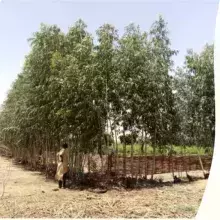


-
Dieudonne ILBOUDO posted in Africa Community
il y a 2 months Public𝑨𝒕 𝒕𝒉𝒆 19𝒕𝒉 𝑾𝒐𝒓𝒍𝒅 𝑾𝒂𝒕𝒆𝒓 𝑪𝒐𝒏𝒈𝒓𝒆𝒔𝒔: 𝑼𝑵𝑪𝑪𝑫 𝑪𝑳𝑷𝒔 𝑯𝒊𝒈𝒉𝒍𝒊𝒈𝒉𝒕 𝑪𝒐𝒎𝒎𝒖𝒏𝒊𝒕𝒚-𝑫𝒓𝒊𝒗𝒆𝒏 𝑰𝒏𝒏𝒐𝒗𝒂𝒕𝒊𝒐𝒏 𝒇𝒐𝒓 𝑾𝒂𝒕𝒆𝒓 𝒂𝒏𝒅 𝑺𝒐𝒊𝒍 𝑪𝒐𝒏𝒔𝒆𝒓𝒗𝒂𝒕𝒊𝒐𝒏
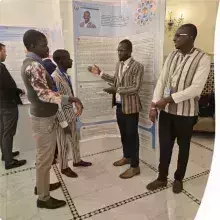
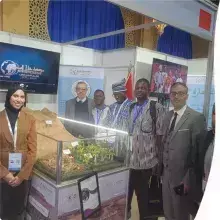
I had the honour of representing the UNCCD Community of Learning and Practice (CLPs) at the 19th World Water Congress, organized by the International Water Resources Association (IWRA) and held in Morocco from 1–5 December 2025.
On December 2nd, I presented a scientific poster entitled “Employment Intensive Investment Programme (EIIP) Strategy and Cooperatives for Water and Soil Conservation.” This innovative approach highlights how community-driven mechanisms, supported by adapted financial and cooperative models, can significantly strengthen water resource management and soil conservation efforts.
The presentation generated strong interest and sparked rich exchanges with international experts, practitioners, and development partners.Beyond the poster session, I participated in several side events focused on:
🔹 Integrated Water Resources Management (IWRM)
🔹 Innovation in water policies
🔹 Smart and efficient irrigation
🔹 Nature-based solutions for water and land resilienceI also had the opportunity to visit the Moroccan Water Museum, an insightful experience that provided a deeper understanding of the country’s hydrological history, current challenges, and long-term strategies for sustainable water management.
This participation proved extremely enriching. It strengthened technical knowledge, facilitated new collaboration opportunities, and highlighted the importance of community-based innovation for protecting water and soil resources, promoting sustainable development, and advancing resilience in the context of climate change.




-
Mika’il Daya posted in Africa Community
il y a 2 months PublicFrom last week to date, we have welcomed 11 new members into the Africa CLP, the highest intake we have recorded in recent months. This is a positive milestone and a sign of growing engagement across our community.
We warmly welcome all new members on board and encourage you to explore the various functions of the CLP portal, participate in discussions, and make full use of the resources available.
Let us keep the momentum going and continue strengthening our collective learning and collaboration.Thank you!
-
Dieudonne ILBOUDO posted in Africa Community
il y a 2 months PublicInnovative Drought Resilience Efforts in Burkina Faso
The presentation highlights practical and adaptable approaches implemented in Burkina Faso to strengthen resilience to drought, improve water management, and support farming and pastoral communities. It showcases innovative techniques, community-led actions, and lessons learned that can inspire wider adoption in drought-prone regions.
This contribution, presented at CRIC23 as part of the side event " Farmer and pastoralist-centric solutions to managing droughts and safeguarding livelihoods" highlights collective efforts toward sustainable land management and drought management, as well as the innovations undertaken to address these challenges.
Please find below the PowerPoint document of the presentation.
https://docs.google.com/presentation/d/1wObPP1cyUQj9ib5n-TLmB6HgZjoBYHo…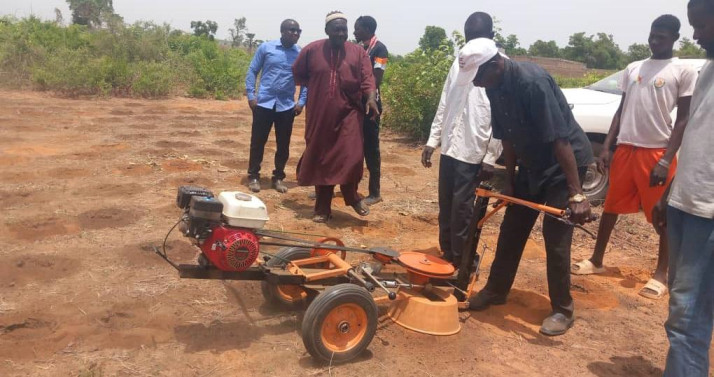
-
Dieudonne ILBOUDO posted in Africa Community
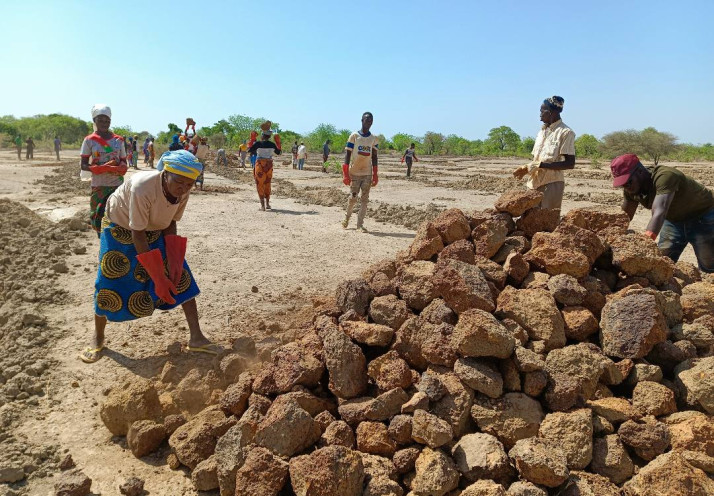
il y a 2 months PublicFrom Local Workforce to Resilient Landscapes: EIIP Strategy and Cooperatives against Desertification
This presentation explores how community-based approaches and labour-intensive methods contribute to building climate-resilient ecosystems. It highlights the role of the Employment-Intensive Investment Programme (EIIP) and the strengthening of local cooperatives as essential pillars for combating land degradation and desertification with an innovation financial tool.
Through practical field experiences, the document showcases how mobilizing local workforce, restoring degraded lands, and enhancing community ownership can generate lasting environmental, social, and economic benefits. The presentation is shared as part of the Side Event: “Money Meets Resilience: Innovative Finance Pathways for Drought Action,” contributing insights on how locally driven solutions can be supported and scaled through innovative financing mechanisms.
Please find below the PowerPoint document of the presentation.https://docs.google.com/presentation/d/1j6L-X-ddKRP9T_4KQoF4niAnLseI1Id…
-
Mika’il Daya posted in Africa Community
il y a 2 months PublicGlad to share this important intervention by our Daniel Tsegai, whose guidance and expertise continue to shape our shared efforts on drought resilience.
In this FRANCE 24 interview (in French), he highlights the rising drought risks and the need for strong early-warning systems, collaborative action, and long-term resilience pathways that protect vulnerable communities.
A valuable contribution to the broader conversation we will be having here on the CLP platform.
